
You clean the bathroom on Sunday, and by Wednesday, the white stains are back. The shower glass starts looking cloudy, and even after a long shower, your skin still feels dry. Many people assume these are normal household issues, but in many cases, hard water is the real cause behind them.
Hard water contains excess minerals such as magnesium and calcium. While these minerals are not usually harmful for daily use, they can leave behind deposits that affect everything from bathroom fittings to your bathing experience. This is where a bathroom water softener can help.
Read on to learn more about the advantages of installing a bathroom water softener.
How Hard Water Affects Your Bathroom Every Day
Hard water problems often build up gradually, which is why many people do not realise how much it affects their daily routine.
One of the most common signs you can notice is the white scaling around taps, showerheads, and tiles. These mineral deposits become difficult to remove with regular cleaning. Soap also reacts poorly with hard water, often leaving behind soap scum instead of rinsing away properly.
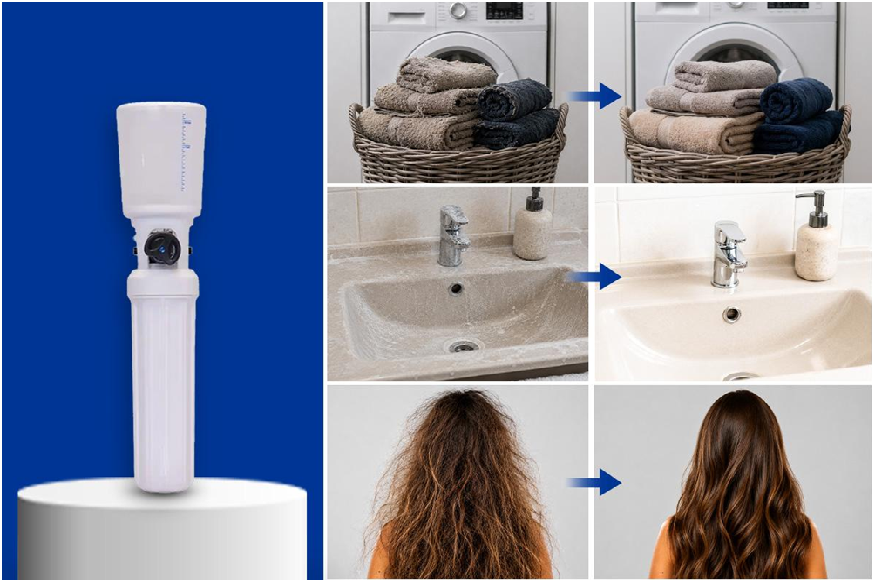
The impact is not limited to surfaces alone. Hard water can make skin feel dry after bathing and leave hair rough or frizzy. Your laundry may also feel stiff even after washing, while bathroom fittings can gradually lose their shine and finish due to continuous mineral exposure.
Read More: HOW OFTEN SHOULD YOU SERVICE YOUR FAN
When these issues continue for years, bathroom maintenance becomes more time-consuming and expensive than expected. So, what can be done?
Installing a bathroom water softener can help reduce many of these problems. Let us look at some of the visible changes you may experience after installing a water softener.
1. Softer Skin After Every Shower
One of the first changes you might notice is how your skin feels after bathing and washing. Hard water often leaves behind a thin layer of mineral residue on your skin, which makes you feel as if your skin is becoming drier, and you will have the need to moisturise your skin immediately.
Softened water makes your skin feel gentler and softer as it allows the soap to rinse away more effectively. Although a water softener is not a skincare solution, it does contribute to improving your skin’s health.
2. Hair May Feel Smoother and Easier to Manage
Minerals present in hard water may settle on the scalp and hair strands, making your hair feel rough, dull, or difficult to manage. Shampoo may not produce lather properly, and even after washing, hair can sometimes feel heavy or dry.
After using softened water, many people have noticed that shampoo works better with softened water and rinses out more easily. Hair may start to feel softer, smoother, and less frizzy after regular use. This is especially noticeable in areas where water hardness levels are high throughout the year, such as the western and northwestern parts of India.
3. Your Bathroom Fixtures Stay Cleaner for Longer
Taps and showerheads constantly come in contact with water. When hard water dries up, it leaves behind white stains and mineral residue that becomes difficult to clean. Taps may even clog due to internal scale buildup.
A bathroom water softener helps reduce mineral deposits, making bathroom cleaning easier and more efficient. Softened water also helps prevent showerheads and fittings from getting clogged, since it contains lower levels of hardness-causing minerals.
4. Towels and Clothes May Feel Less Stiff
The minerals found in hard water not only damage bathroom surfaces but also end up affecting clothes. This explains why even after applying fabric softeners to your clothing, it can still feel rough or stiff due to mineral buildup.
Using softened water can help clean your fabrics better, ensuring your clothes are softer than before. You may even notice that your bathroom mats and daily-use clothes have a better texture after repeated washing.
Read More: EXTERIOR HOUSE PAINT IDEAS THAT AGE WELL: COLOURS THAT LOOK BETTER OVER TIME
However, installing a water softener depends on factors such as your water’s hardness level, daily usage, and convenience. If your water usage is relatively low and you prefer a point-of-use solution, a bathroom water softener can be a convenient choice. On the other hand, if your water usage and hardness levels are high, installing a water softener for the home tank may be a better option.
Conclusion
Hard water issues usually go unnoticed as people find themselves becoming accustomed to them. From the persistent stains on the faucet to the continuous bathroom cleaning chores, from dry skin after showering to coarse towels, the list can go on forever.
The installation of a bathroom water softener, however, turns out to be quite effective in dealing with these inconveniences. The effects of water softening technology eventually result in easy bathroom maintenance, comfortable bathing sessions, and reduced mineral deposits around the fixtures.