
Let’s be honest. Most people look at the tata gold etf share price on a random Tuesday afternoon, see it nudging up or down a few rupees, and just shrug. They assume it’s “market stuff.” But hold on, let me think about that for a second, because there’s actually a lot going on beneath the surface. Gold ETF prices in India aren’t random. They respond to a fairly fascinating web of factors, some obvious, some surprisingly sneaky. Pull up a chair. Let’s get into it.
The Undeniable Pull of International Gold Rates
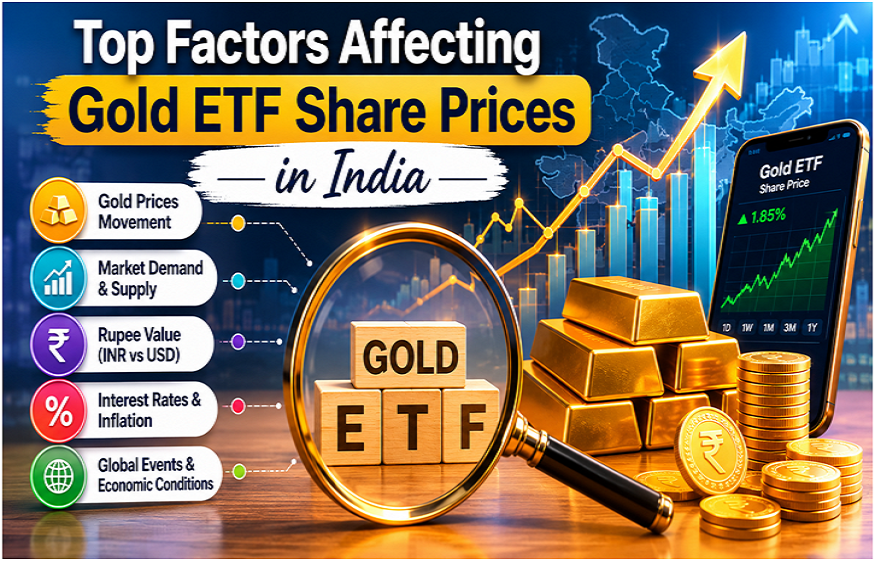
First things first. Gold ETFs in India are priced in line with physical gold, and physical gold is priced globally. The London Bullion Market Association sets benchmark prices that ripple across every gold market on earth, including ours. So when geopolitical tensions flare up somewhere halfway around the world, or when traders in New York get nervous about inflation, you’ll feel it in the Tata gold etf share price right here in Mumbai or Chennai. That’s just how interconnected things are now. Global gold rates are probably the single biggest driver of domestic ETF valuations, and there’s really no escaping that reality.
The Rupee Dollar Dance Nobody Talks About Enough
Now, here’s the thing that catches a lot of Indian investors off guard. Even if international gold prices stay perfectly flat, your gold ETF can still move. Why? Because gold is priced in US dollars globally, and you’re buying in Indian rupees. When the rupee weakens against the dollar, gold gets more expensive in rupee terms, which pushes ETF prices up. When the rupee strengthens, the reverse happens. It’s almost like two separate forces tugging at the price from different directions. You’d think people would talk about this more, but currency movements are often the quiet factor in the background that doesn’t get nearly enough credit.
Domestic Demand and the Indian Obsession with Gold
Indians and gold, well, that’s a relationship with centuries of history behind it. Wedding season. Dhanteras. Akshaya Tritiya. These aren’t just festivals; they’re economic events that genuinely influence gold demand. When physical demand in India spikes, it can put upward pressure on domestic gold prices, and ETF valuations tend to follow. Now, ETFs are paper gold, technically speaking, but because they’re backed by physical bullion, heavy demand cycles in India still matter. The demand story is never really separate from the price story. They’re woven together more tightly than most casual investors realize.
Interest Rates and the Opportunity Cost Argument
Here’s something a bit more counterintuitive. Gold doesn’t pay dividends. It doesn’t yield interest. So when interest rates are high, say the RBI hikes rates and fixed deposits start offering 7 or 8 percent, gold starts looking a little less attractive by comparison. Why sit in gold when your bank is offering decent returns? Investors shift, prices soften. Flip that around: when rates are low and your savings account is barely keeping up with inflation, gold starts looking like the smarter bet. This opportunity cost dynamic is real and measurable, and it plays out repeatedly across gold price cycles in India and globally.
Read More: WHY UK INVESTORS ARE TAKING A CLOSER LOOK AT ETF LIQUIDITY AND VOLATILITY
Inflation and Gold’s Ancient Role as a Hedge
Gold has been humanity’s inflation shield for thousands of years, and that instinct hasn’t gone anywhere. When inflation rises in India, whether it’s food prices, fuel costs, or general cost of living, investors start reaching for assets that hold real value. Gold ETFs benefit directly from this sentiment. There’s almost a psychological dimension to it too. People don’t just buy gold because the math works out. They buy it because it feels like safety. Emotional buying is real, and it moves prices in ways that pure fundamental analysis sometimes misses.
Expense Ratios and Tracking Error: The Boring Stuff That Matters
Okay, let’s take a slight detour here because this one gets overlooked constantly. Gold ETFs aren’t just mirrors of gold prices. They carry an expense ratio, which is the annual fee charged by the fund house to manage the ETF. Most gold ETFs in India have expense ratios in the range of 0.5 to 1 percent annually. That doesn’t sound like much, but over a decade? It adds up. There’s also something called tracking error, which is the gap between how well the ETF actually mirrors gold price movements. A high tracking error means you’re not really getting the gold exposure you think you are. These internal mechanics affect the net asset value of the ETF and, by extension, the share price you see on your screen.
Liquidity and Trading Volumes on the Exchange
Gold ETFs trade on stock exchanges like any other equity. And like any traded instrument, liquidity matters. A gold ETF with high daily trading volumes tends to have a tighter bid-ask spread, meaning the price you buy at and the price you sell at are closer together. Low liquidity? You might end up paying more than the actual NAV just to get in, or accepting less than NAV to get out. For large investors, this becomes a significant consideration. For retail investors putting in smaller amounts, it’s less of an issue, but still worth keeping an eye on.
RBI Policy and Regulatory Shifts
The Reserve Bank of India’s stance on gold imports, customs duties on gold, and broader monetary policy all feed into the ecosystem. Whenever the government tweaks import duties on physical gold, it changes the cost structure for gold ETFs that hold bullion. A sudden hike in customs duty can push domestic gold prices above international benchmarks. Policy announcements can cause quick, sharp moves in ETF prices that feel sudden but actually have structural roots. Regulatory clarity or uncertainty around gold investment instruments also affects investor confidence in the long run.
Read More: UNDERSTANDING WEALTH GROWTH THROUGH SMART FINANCIAL CALCULATIONS
Market Sentiment and the Fear Index
You know that vague phrase “market sentiment”? It’s actually concrete. When equity markets are crashing and investors are scared, money flows into gold as a safe haven. When markets are booming and everyone’s chasing returns in stocks, gold gets ignored. The tata gold etf sees this pattern play out repeatedly, rising during periods of market stress and dipping when risk appetite is high. It’s almost a predictable human reaction. Fear drives gold up. Greed drives it sideways or down.
Putting It All Together
So what’s the bottom line? Gold ETF prices in India are shaped by a remarkably layered set of forces: global gold rates, currency movements, domestic demand cycles, interest rate decisions, inflation trends, fund-specific mechanics, liquidity conditions, regulatory changes, and raw market sentiment. None of these operates in isolation. They interact, sometimes amplifying each other, sometimes canceling each other out. Understanding even a few of these factors can transform a confused glance at the tata gold etf share price into something resembling an informed perspective. And that, honestly, is what separates investors who simply own gold ETFs from those who actually understand what they own.